
How to Repurpose Customer Story Footage Into 27x the Content
By Chief Storyteller, Rain Bennett
When I was a kid, growing up on the waterfront of “Little” Washington, NC, there were no rooftop restaurants, private marinas, or any other touristy spots like there are now.
It was way more industrial in the 1980s. One of my “neighbors” was a lumber mill that operated for almost 100 years.
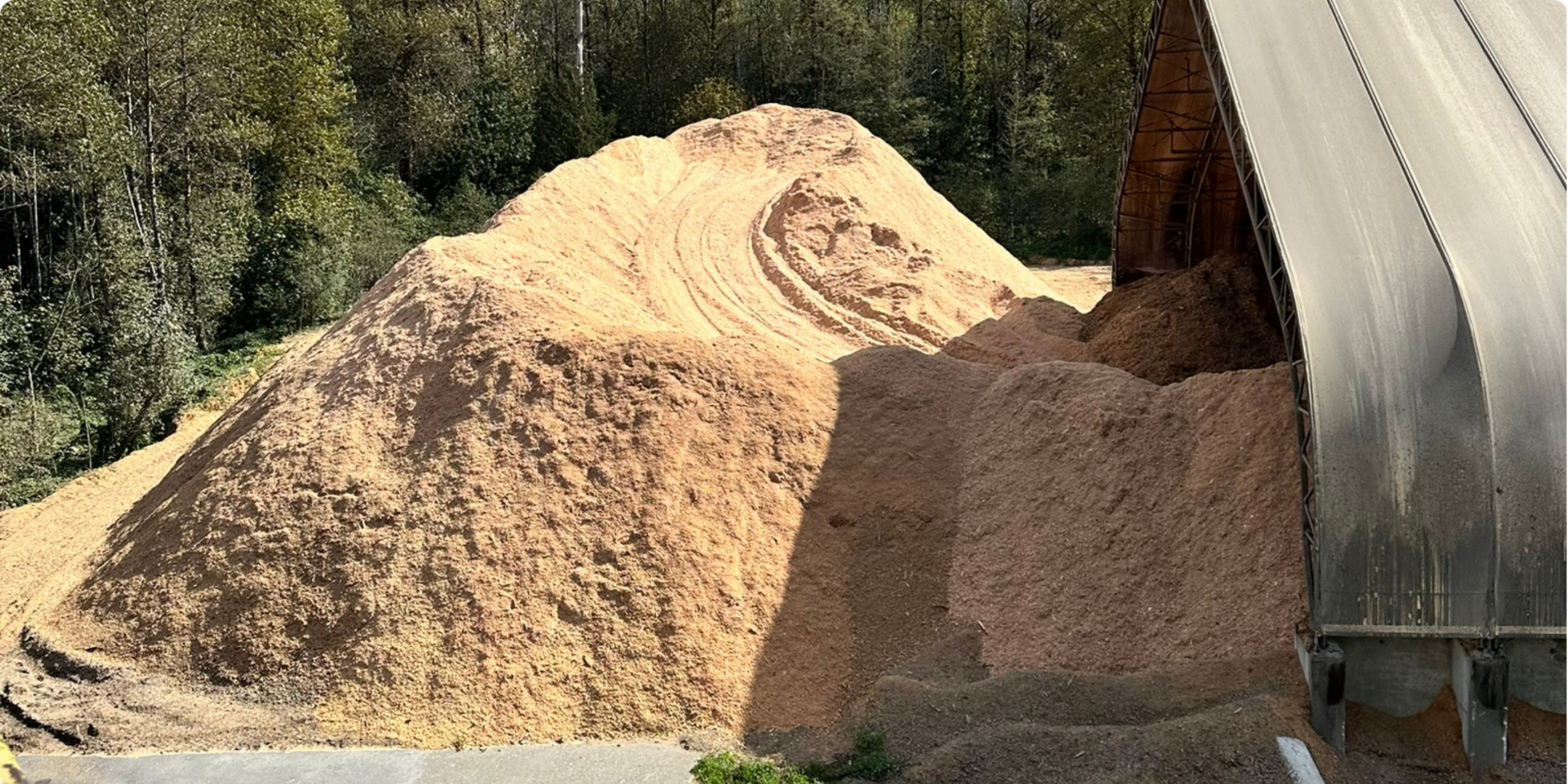
I still remember seeing the giant piles of sawdust on my way to the playground. Even as a kid, I was amazed by how much was leftover that they didn’t even use! After one board, sure, it didn’t seem like much. But after a whole day, it was incredible how much dust piled up on the ground.
As an adult, however, I realized they didn’t waste the sawdust at all. They sold it!
They bagged it up for animal bedding, sold it to mushroom growers and community gardens for compost, turned it into fire starters, and even shipped it in bulk to companies that convert it into wood pellets.
Nothing about the sawdust cost extra to produce. It was already there—a natural result of doing the "real" work of milling lumber. Someone just had to decide it was worth collecting and repurposing, instead of sweeping it into a dumpster.
We think about video production the same way.
The Sawdust Sitting on Your Cutting Room Floor
The idea of selling the byproduct of creating your primary product is in no way unique to the lumber business.
Anything you create has something leftover from the creation of it that holds significant value for the right customer, if you leverage it wisely.
Our primary product at Elemmir is the Customer Story.
Here's what a typical shoot looks like:
We send a crew on-site, interview two or three people for 30-45 minutes each, and capture hours of b-roll—hands on keyboards, product dashboards mid-scroll, teams in hallway conversations, wide establishing shots of the office or facility, etc.
By the time we're done editing, we distill the raw footage into a tight 90-120 second video.
That's the deliverable.
But let’s do the math on what's left over…
If we shot 90 minutes of interview footage and used two minutes of it, that means roughly 98% of the content never sees daylight.
And that footage isn't suddenly irrelevant just because it didn’t make your final cut. This is your subject matter expert explaining, in their own words, exactly why they chose your platform, what problem it solved, what almost went wrong, and what surprised them.
It's emotional, it’s specific, and it’s unscripted in a way that's genuinely hard to just manufacture. You’ve already paid for the crew, the travel, the editing hours, and the client coordination to get it. But right now, 98% of your investment is sitting in a project folder, doing absolutely nothing.
That's your sawdust.
What "Selling" It Actually Looks Like
Okay, so you're not going to bag up b-roll and list it online. But the underlying idea—to find a second, third, and fourth use for something you already invested in—definitely applies.
Here are some easy examples of content you can create from your cutting room floor:
Blog posts. We typically do two to three interviews for a Customer Story. That’s two or three distinct narrative threads. Two to three unique perspectives and experiences of your product. One might be super deep about the product itself. Another could be about industry-wide challenges. All of these are valuable as standalone content.
Quote graphics and social captions. Every interview has a handful of lines that are fantastic, “tweetable” pull quotes. The kind that are highlighted in a blog post like this. Transcribed and dropped into a branded quote graphic, those same lines become a week’s worth of LinkedIn posts.
Short-form vertical video clips. If we shoot the b-roll and interview footage with any intentionality, there's almost always a self-contained 15-30 second moment that works as a standalone Reel or Short. It could be a single insight, a strong reaction, or a visually interesting process shot.
Infographics. Numbers and stats that got cut from the video for pacing reasons (they slow a 90-second edit down) often make the strongest infographics, because readers can actually sit with them and digest the data.
Internal and sales enablement content. Longer, less-polished cuts of an interview can be genuinely more useful to a sales team than the finished video—reps often want the messy, specific detail that a polished customer story necessarily trims out.
None of this requires a second shoot. It requires someone to go back through the footage with a different question in mind: not "what's the best 90 seconds?" but "what else is valuable in here?"
One Shoot, 27 Pieces of Content
Here's what that looks like in practice. Say we spend a day on-site with three interview subjects and come back with several hours of raw interview footage plus a full card of b-roll.
The contracted deliverable is one customer story video. From that same raw footage, without booking a single additional minute of anyone's time, you could reasonably pull:
1 Customer Story
1 Product Video (a shorter cut, solely focused on the functionality of your product)
3 Blog Posts (one per narrative thread from each interview subject)
9 Quote Graphics (roughly 3 quotable soundbites per subject)
6 Short-Form Clips (2 per person, cut for LinkedIn, Instagram, or Shorts)
3 Infographics (built from stats and numbers that got cut from the video for pacing)
1 Roundtable or Longer-Form Piece (the full interview or transcript, useful as a standalone asset in its own right)
3 Sales Enablement Clips (an extended, less-polished cut per subject, for the sales team to use directly in pitches or meetings)
That's 27 distinct assets from one day of production. The video is one deliverable; the footage is worth twenty-seven.
One Caveat to Consider
This isn't “free,” to be clear. Repurposing footage still takes real editing time. It's a genuine line item, not a magic switch you flip after the main edit wraps.
But compare that cost to the cost of the alternative, which is producing net-new content from scratch. That means booking another shoot, coordinating another interview, paying for more crew days. Clipping is almost always cheaper than creating, because the expensive part has already happened. The editing is the only remaining cost, and it's a fraction of what it took to capture the raw material in the first place.
Otherwise, you’re just wasting that 98%. And that’s not a great ROI.
Where to Start
If you're sitting on a library of customer story footage, you need to do an inventory.
Pull the raw interview footage and b-roll from your last two or three shoots and watch it again with fresh eyes, specifically for moments that didn't make the final cut. You'll probably be surprised by how much is in there.
The mill doesn't stop being a mill because it started selling sawdust. It just stopped throwing away something valuable. It’s the same idea here.
Curious how much is sitting in your own footage archive? Set up a consultation with Elemmir—we'll help you figure out what's already there and what it's worth pulling out.
Keep telling your stories!
Rain Bennett | CSO, Elemmir